Tuesday, September 21, 2010

Introducing the Permaculture Designers Manual, Chapter 2: Concepts and Themes in Design

This is the second in a series of fourteen introductory articles about permaculture — one for each chapter of Bill Mollison’s “Permaculture: A Designers’ Manual.” The series was originally initiated back in March of 2010.  I only managed to finish and post the first before the Canadian PDC teaching season swept me away.  With the fall slow down I am at the computer again and will get through as many of the remaining chapters as I can between now November 21st when I start teaching a two week Permaculture Design Certificate (PDC) I will be teaching at Zaytuna Farm this coming November.  Through this series I will connect theory with practice, and share practical examples of permaculture in action.


As we understand from Chapter 1, permaculture is an ethical system of design that produces a stable and secure place for humans and all other living things. Chapter two is about what inspires us and how the functions of natural systems inform the design process.
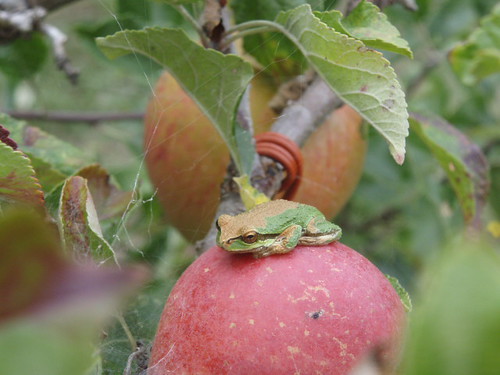


 likes apples too!!


What are the principles of natural systems? What are our design directives for sustainable systems?  What is a working definition of SUSTAINABLE?

Sustainable: Is Any system which produces and stores enough energy and resources to provide for its ongoing maintenance and reproduction.

Sustainability is about energy and how it is captured, stored, and cycled within a system.  Energy is in constant flow and flux moving from one place to another.  Energy is always on the move.  Energy is all things, continually changing from one form into another: heat, light, water, people, soil, trees, animals, wind, electricity, fuel, sound, cash…et cetera.


In the development of sustainable systems, we almost always need to make a significant investment of energy upfront.  Particularly when working in degraded places such as our cities, agricultural lands and clear-cut forests.  Permaculture is the design and implementation of systems thatIndustrial system produce more resources and energy over their lifetime than was originally expended in their implementation.

This diagram illustrates the basic pattern of the industrial system. It is in constant need of resources and energy input, necessitated by the constant flow of energy and resources out.  The waste stream, the net loss, is the most critical component of this system.  Without this constant loss there would be no need for a continued consumption and nobody would be making any money.

In the words of Albert Einstein, “we cannot solve problems by using the same kind of thinking we used when we created them.”  While there are many great and beneficial things that have come out of the industrial pattern, it is not and never will be a pattern for sustainable society.  The concept of the consumer is not part of a sustainable future.  We need a different model.

There are no evil doers in this system, it’s just the way it has been designed.  By our participation we continue to support this self destructive pattern.  The challenge we face is the wholesale re-design of systems with out the necessity of wholesale revolution.  We have experimented with bloody revolution in the past and it is not a viable option for the present.


How do we make the shift with elegance and grace?

Ecosystems

This diagram outlining the basic pattern of an ecosystem.  Ecosystems use the basic energy inputs of the sun, climate and soil.The Ecosystem So long as the sun shines this system will continue to function.
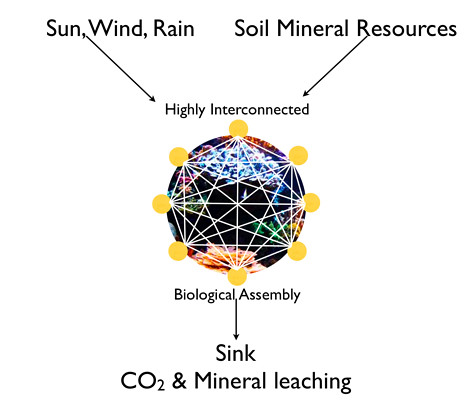

The connections between the elements of the system are both direct and indirect exchange of service.  There is no free lunch–everything returns.  Everything gardens, all species, ourselves included, have an impact.  All species play a role in the evolution of the system. We all have a function.

Permaculture focuses on function.  It is not diversity alone that generates stability and resilience.  There must be functional diversity, a diversity of connections.  In truth, the long term survival of a species has nothing to do with competition and brutality.  Long term survival is for species that place themselves in most service to the whole.  As a species of choice and innovation, we have the unique opportunity to design ourselves into a position of service to all of the natural world.  In return we can expect clean air, clean food, clean water, clean communities and long term survival.  We may restate the problem as follows:

How do we best become of service to each other and all other things in the biosphere?

Permaculture draws on the themes and principles of ecosystems to assemble endlessly productive and absolutely abundant human habitat.  Following the ecosystem model, we have all the information required to design and implement sustainable human habitat.


Permaculture Best Practices:

Design patterns to details.

All we need is to understand the basic patterns of natural systems.

Principles of Natural systems:

•    everything is connected to everything else
•    every function is supported by many elements
•    every element serves many functions

Simple yet profound.  Are these principles useful? No.  Principles are not very useful.  Principles are little more than passive observation.  Being people of action, we need directives. We must translate principles into directives.

Permaculture directives for real world design:

•    The needs of one element must be met by the yields of another.
•    Every critical function must be supported by multiple elements.
•    Every element must serve multiple needs.

Our definition of sustainable made use of the term ‘resources.’  Design requires a sound understanding of what a ‘resource’ is and how it functions.

Resources fall into 5 broad categories:

1. Those which increase with modest use (pastures, wood coppice systems)
2. Those unaffected by use (the wind, a view, water used to turn a water wheel)
3. Those that degrade if not used (an annual vegetable crop, information)
4. Those that are reduced by use (fossil fuels, deep aquifers)
5. Those that degrade other resources if used (nuclear power, herbicide, insecticides, artificial fertilizers, weapons)

Design Directives for ethical and sustainable real world design:

•    The majority of resources used must come from categories 1, 2 and 3.
•    Use category 4 resources modestly to develop resources in categories 1, 2 and 3.
•    Avoid category 5 resources at all costs.

Our design implementation options are limited by our current resource set.  We cannot spend money we don’t have and we cannot eat food we have not grown.  When making decisions about how to invest our resources we must have a very clear path forward. Below is a set of directives that have never let me down.  Of course in the world of debt based currency and centralized global distribution networks, we can spend money we do not have and eat food we have not grown.  That is why permaculture starts with the ethic.  A conscious choice to divest ourselves from a destructive system, while simultaneously investing in the design of productive systems.

Directives for order of Investment :

•    First, invest in elements that produce energy and resources
•    Second, invest in elements that save on energy and resources
•    Third, invest in elements that consume energy and resources

Water is the foundational energy system for all life on the planet. Knowing that fact, as permaculture designers we can follow a very simple set of design priorities.

Directive of Real World Design Priority:
•    water
•    access
•    structures

At the very least follow this progression and you will not go wrong. It does not matter what scale, location, or climate. Always think “water, access, structures”. Water and where it is coming from and where it is going are the most important energy consideration of any design. As much as 40% of all the energy consumed by cities is used to move around water.

To sum it all up, permaculture is really about our first step. If our first move is towards the benefit of living systems, which we are all a part of, all subsequent steps will follow along the same path.  With clients it is often the case that they need help knowing where to start.  “Here’s our 10 acres… what do we do with it?”

My duty as a permaculture designer is to give the project sustainable direction–a starting point for sustainable and emergent design as the user’s needs, experience and skill set change and develop through time.  What it boils down to is energy and how it flows through the design. By examining and understanding the basic patterns of how energy and resources move through an ecosystem we gain the insight and knowledge needed to design sustainable human systems that harmonize with the natural world.


Be sure to check back for the Chapter 3 ‘Methods of Design.’

Monday, May 3, 2010

Re syndicated Aricle from The Time Colonist, Victoria BC


How green does your garden grow?

Re syndicate Article of an Interview with Jesse.
By Steve Carey, Times Colonist

Permaculture

Applying permaculture principles in your yard and home is a great way of creating self-sufficient ecosystems. Permaculture is a design system based around three concepts: people care, earth care and the return of surplus to the land.

"One of the big misconceptions about permaculture is that it's just a way of gardening. That's not entirely true," says Jesse Lemieux of Pacific Permaculture, a consulting and education business. "Permaculture is not the roof, the gutter and the garden. It's the connection that we make so that every time it rains, water flows down the gutter into the garden, passively watering the garden without us ever having to turn on a valve."

Wednesday, April 14, 2010

The Potato Patch Redux


Where do our carbohydrates come from? What is the ethical implications of grain culture?
The picture above says it all.

I have reduced my fossil fuel consumption as practically possible at this time, I minimize my use of paper products, and avoid heavily packaged products and I have an overly productive greens gardens in a region of Canada that has surplus apples and shell fish. By most accounts I live a relatively sustainable lifestyle. Or do I?

I still rely on the tillage agriculture, organic or otherwise, for my supply of bulk carbohydrates. And when it really comes down to it deforestation and industry are a bad second and third place in environmental damage when stacked up beside tillage grain and grain legume production.

By all accounts the soil loss and desertification created by tillage grain culture are the most destructive activities on the planet.

My next personal ethical frontier is extricating myself from the need for tillage grain culture.

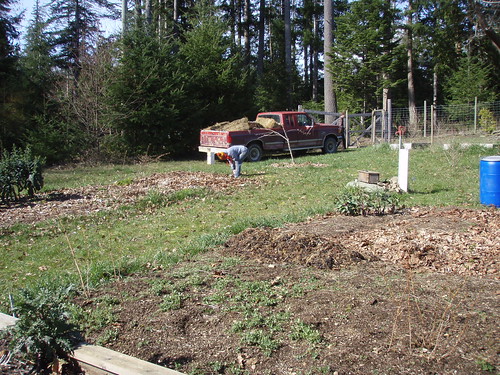
So after the sad little failure in an attempt to attain carbohydrate sovereignty. We went back to the drawing board and to our closest permaculture colleagues for advice on a not so labour intensive method of getting a great yield of potatoes. A lot of the old timers suggest digging down to plant and hilling soil up twice through the growing season. This would be great if we had some space already prepared.
All we have is lawn and after last years painful experience we did not want to dig for potatoes this year. What we want to demonstrate is that our bulk supply of carbohydrates can be gotten with a minor amount of physical input, while simultaneously building a healthy soil system. It is an easy thing to grow enough salad greens and tomatoes. It is a whole other project to provision ourselves with enough raw carbohydrate energy.

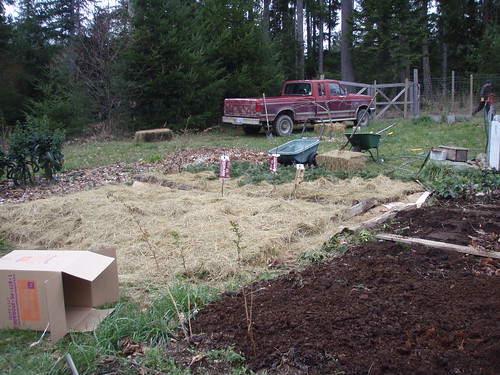
We have also heard great things about potatoes in mulch beds and mixed reviews on the potato mulch tower. So we with that we have chosen to go with a potato sheet mulch over some old sod on some rough soil and see what happens.
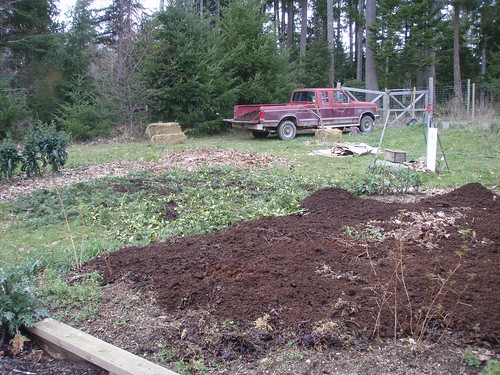
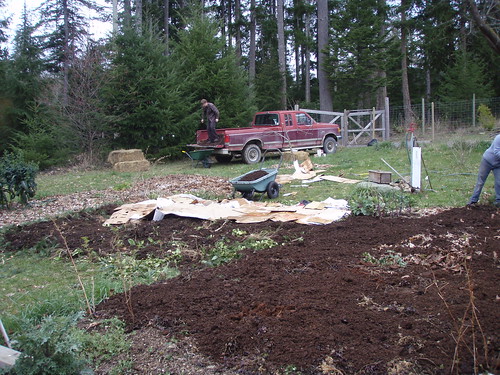
We are working with the strip of sod located between the two garden beds in the photo. Not only are we trying to grow potatoes, we are using this planting approach to pioneering the system out of grass and into fertile loose garden beds with health soil structure. A Much better approach than digging, if it works.

We recently cut down a few fir trees that where to close to the house. Not wanting to burn the branches and slash from the trees, we processed it up with a machete and used it as our bottom layer in the sheet mulch along with kitchen scraps, last year 'scompost pile and a heap of well composted horse manure.

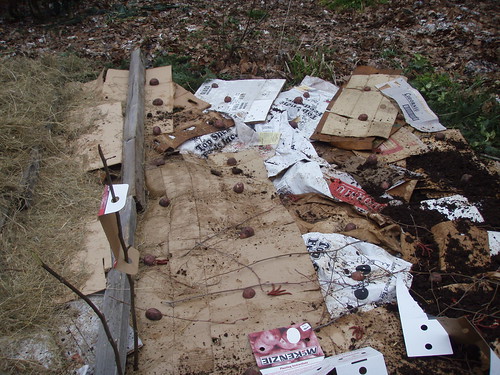
The next layer to go down was, of course, cardboard we did our best to soak this down. It is really important to soak the cardboard well, as it will suck moisture our of the soil if it dries out. I find that it works best to be able to dunk it and let it sit in water. A near by ditch pond or small kiddie pool will work well. In this case we where without those features, fortunately it was still March on the west coast of Canada so rain is great supply. The night we did this it rained about 3omm so the cardboard got a good soaking. It is also critical to keep the cardboard under at least 15cm of mulch to avoid having it dry out.

Next came the potatoes. Nothing fancy here just place them at recommended spacing right on top of the cardboard. the roots know what to do. As long as the bed stays, moist the plants will find what they need, easily penetrating the cardboard down to the soil.

A thick layer of moldy hay and a finishing layer of fir branchlets and we have a finished sheet mulch potato bed. All told it was about 6 hours of people power and not a sing scoop of soil was turned over. My back didn't even know it had done any work. As the potatoes grow we will add more mulch, it is the same as hilling your potatoes in a bare soil bed. The idea being that in the extra mulch depth the potatoes will grow more tubers. Even if we get poor yields, comparable to last years crop, this sure beats the 4 days of back breaking hand tilling we did for last years meager crop. We will keep you posted as it turns out.

Thursday, April 1, 2010

Trouble in the Potato Patch

To me there is no better opportunity for learning than a big fat mistake. And a big fat mistake is the only way to describe my experiment with potatoes last growing season. I also think that learning increases exponentially with pain association. As my potato experiment resulted in a very sore and tired lower back, producing a less than satisfactory yield of potatoes I learned a lesson I will not soon forget.

Here's how it all went down.


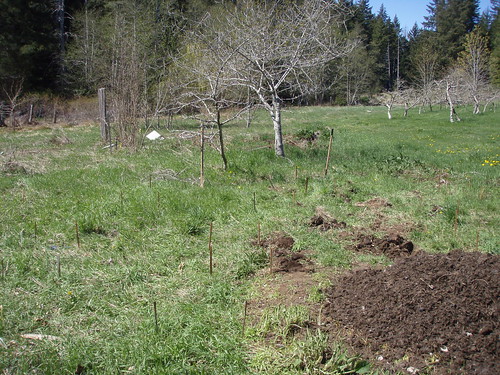
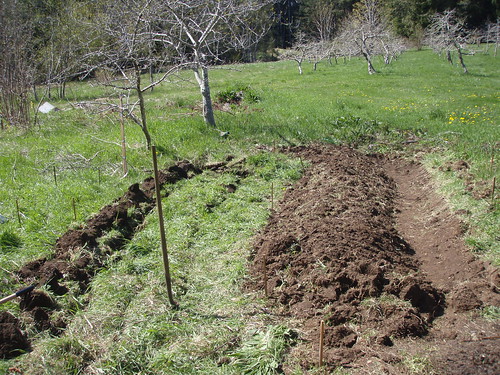
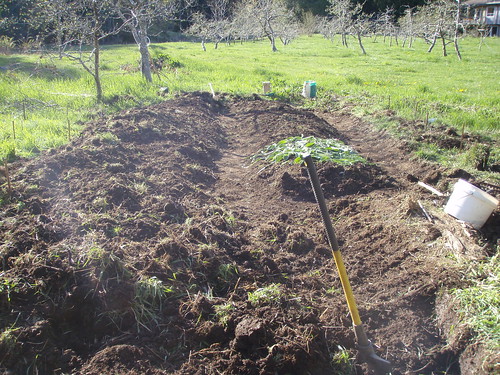
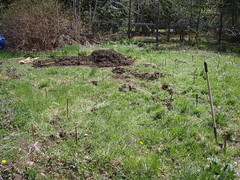
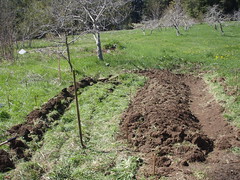
What you are looking at here is the 7 year old sod that is to be turned into a potato bed. I do mean turned. All told it was about 20 hours of back breaking mattock and spade work to dig these large on contour potato beds. Below you see the sequence of how things took shape.


Digging finished, beds shaped and pathways to a precise level end to end; leveling of the pathway function to distribute water and nutrient evenly along the bed; also acting as water harvesting during big rain events.
We seed with a legume cover crop and planted our potatoes. Then spread a thin mulch of grass and comfrey over top, just thick enough to help with germination.
Several weeks later the beds where nice and green with cover crop.
At this stage things where looking good and potatoes where growing well in with the cover crop. As the season progressed we chopped down the cover crop and mulched the potatoes with it. We had beautiful top growth on the potatoes. Unfortunately when it came time to harvest actual potatoes they where few and far between. We got less that 100 pounds for all of the space you see planted above. A very poor return for a large effort up front. I think that it was the nitrogen of the legume cover crop that encourage lots of top growth but little tuber production. Needless to say this approach is not being used for potatoes this season. We already have a patch planted that is at least as big and we did it all in about three hours and didn't turn soil once. I will fill you in on my next posting "The Potato Patch Redux" sometime next week. Until then...

Permaculture In The Kootenays


If you are looking for a great learning opportunity in a beautiful setting here it is....

This May 23rd-June 4th, Rob Avis, my good friend and respected college, is teaching a full length "Permaculture Design Certficiate." Hosted by "Mountain Waters" retreat in the heart of the Kootenays, this course will be the experience of a life time. I wish that I was going to be there, but commitments I have in Idaho make that impossible.

I have always admired Rob's enthusiasm attention to detail and passion he has for the discipline of permaculture. The student will be in good hands with Rob as there instructor and will come out of this course with a fully functional knowledge base and workable skill set in permaculture design.

Right now Rob is in Australia learning from the best of the best, Geoff Lawton, at the "Permaculture Research Institute of Australia", and recently made a blog posting about what he is learning there. Rob will be back on home soil just in time for the Nelson course and fully charged up to share what has been gained during his time down under.

Wednesday, March 24, 2010

Resyndcated Article on Pacific Permaculture in The Prairies

Permaculture on the Prairies
by Jenn Hardy
THE SASQUATCH

Jesse Lemieux, who started Pacific Permaculture with his wife Tanya in 2008, taught the two-day introductory class at the University of Saskatchewan. As part of a prairie workshop series, he also taught two-day courses in Calgary, Edmonton and Red Deer throughout January. The course was a warm-up to a 72-hour intensive course that will run over a two-week period in August in Saskatoon...

To read the full article click HERE

Monday, March 22, 2010

Introduction To Permaculture


Chapter 1: Introduction to Permaculture
by Jesse Lemieux
This is the first in a series of fourteen introductory articles about permaculture — one for each chapter of Bill Mollison's “Permaculture: A Designers' Manual.” Through this series I will connect theory with practice, and share practical examples of permaculture in action.
Chapter One: “Introduction to Permaculture”
Permaculture design is a system of assembling conceptual, material and strategic components in a pattern which functions to benefit life in all its forms. It provides a sustainable and secure place for living things on earth. While each components is important, permaculture is less about the things themselves and more about how the things fit together.
Permaculture does not dwell on the negative. While we maintain a healthy awareness of present day problems, we are more focused on the positive, continually asking the question "what do we want?".
Few people would argue that our global and local environments are on the down-hill slide, but it is important that we cut clearly through the mass of misinformation and half-truths that exist. Only by getting to the heart of the matter can we reasonably design a plan to change things.
Just the other day I was reading an article in The Province, which took the position that we need to start investing in natural systems if we are going to maintain our precious existence on this planet. The article stated that 60 countries have lost nearly all their forests, and that 1/3 of all fish stocks, food for two billion people, were on the brink of collapse. Furthermore, due to soil erosion,we can no longer farm 30% of all agricultural land on the planet.
How did we get here? We rely on a system of economic and social organization that has seen us become less and less responsible for our own basic needs. By supporting and expanding this system, we have come to rely more and more on distant lands and resources.
Agriculture is particularly grim and is responsible for more deforestation, CO2 production, chemical pollution and soil erosion than any other activity on the planet. The sad part is we have been convinced that the only way to feed ourselves is through the destructive and highly centralized system of plow-based agriculture. This is just plain false.
Consider the following statistics.
One billion people on the planet, 80% of whom are involved in agriculture, are malnourished and hungry.[1]
US agricultural production produces $300/acre [2]
Home gardeners produce over $42,000/acre, with an average of 5 hours work per week [3]
Just take a quick look around your neighborhood and you can see that home gardening gets far better production per acre than any other agricultural system.
The largest and most energy intensive agriculture on the planet is the lawn. It uses more fossil fuel, human energy and chemical fertilizer than most other forms of agriculture. What does it produce? Polluted watersheds, polluted oceans, health problems and lawn trimmings for the garbage dump.
By turning our lawns into food systems, we can immediately remove ourselves from two of the most destructive systems on the face of the planet: the lawn and plow-based agriculture.
This brings us to the “Prime Directive of Permaculture”: to take responsibility for our own existence and that of our children. In other words, we need to get our house and garden in order, so that they feed and shelter us.
Very few of us living in urban areas produce enough food to meet our own basic needs. We can all use permaculture to overcome this fundamental disconnect in contemporary urban life.
When making decisions within the permaculture framework, we rely on the permaculture ethic as a tool for conflict resolution and benchmarks to measure success in our design. This ethic is simple:
Earth Care: living, growing and promoting the function of living systems. Building biomass (capturing CO2 in living systems) is good.
People Care: providing clean water, food and shelter, and strong communities that do not enslave people.
Return of Surplus: all surplus generated by these systems is returned back into earth care and people care, not into the generation of more surplus for the sake of surplus. Growth is not endless, since we live on a single planet with finite resources.
Permaculture is an ethical system stressing positivism and cooperation. We use this ethic in all aspects of the design process. It is a value set that guides us. It is the ethic that makes some design strategies available to us and others not, as any design we produce must fit within the ethical criteria.
Implicit in this ethic is the Life Ethic: all living organisms are not only means but ends in themselves. In addition to having value to the human species and other living organisms, they have an intrinsic worth. All life is good.
Even though the ethic is well-reasoned, it is still somewhat subjective. It's important to be aware of my personal biases. We are all on a continuum of understanding, and it's not my duty to pass judgement or convince anybody of how wrong they are and how right I am. My only responsibility is to take care of my needs and be sure that my activities fall within the permaculture ethic. As I move further along the road to a sustainable lifestyle I generate a surplus of resources and information that I willingly share with others who are working towards a right-livelihood themselves. Information is often the first resource in surplus.
So, how do we design lives to become ones of net production as opposed to ones of net consumption?
A practical application:
Earth Care: a well mulched home garden builds soil faster than any other system. This reduces our need for plow agriculture and takes kitchen waste, paper waste and all other compostable materials out of our land fills.
People Care: the garden provides local, clean and healthy food to the gardener, as well as a source of relaxation and contemplation.
Return of Surplus: home gardens are usually over-productive and surplus is shared with neighbors and friends, or left to compost back into the soil.
In the words of my friend and mentor, Geoff Lawton: “All the problems of the world can be solved in a garden.” It does not stop at the garden. Permaculture is such a good-sense approach to design and problem solving that it can be applied to many other facets of human life. This is not a move backwards to feudalism and peasantry, it is an evolution towards a society and planet of absolute abundance.
Over the next thirteen months I will cover each chapter in the Permaculture Design Certificate and explore many ways to use this revolutionary system of design. I believe you will be inspired by the simplicity and the commonplace nature of the solutions to our incredibly complex set of political and environmental problems.
Check in again next month when I will cover chapter two “Concepts and Themes in Design.” This chapter looks into the nature of sustainable system, their principles and our directives as designers for positive change.
Footnotes/Sources:
[1] Panel on food security, World Economic Forum, 2009
[2] US Agricultural census, 2007
[3] National Gardening Association, 2009

Monday, February 22, 2010

The Permaculture Design Certificate

The Permaculture Design Certificate (PDC)
by Jesse Lemieux

What is needed to design a sustainable human society full of abundance and security for all living systems? Information, empowerment and ethics.

The Permaculture Design Certificate (PDC) teaches students how to use information, resources and ethics to meet local needs on a limited land base.

There are no "bad guys" and nothing is inherently evil. It is the designs of the systems we use that are the problem. A large machine can be use to bring down a forest, or it can be used to repair damage and degraded landscapes. In the same way, I can either use a hammer as weapon, or to build a house for a friend. The difference in outcome is one of intention and design.

The fact is that we are working with a system that was never designed to provide a sustainable or secure place for life on this planet. The system we are working with was designed to concentrate wealth, resources and power into the hands of a few. This system produces elite classes, sickness and environmental degradation.

The justification for such destructive ways was one of service to the larger whole. In other words, we tell ourselves that while the present way of doing things does not provide all people in all places with a secure livelihood, it can maximize happiness for a maximum number of people.

A great many good things have come out of this system, like this computer I
type with. But it is obvious that the time for change has come. The planet is raising alarm bells. Fancy technological adaptations may give us some extra time, but if we are concerned with the long term survival of the human species, then we had better start evolving and designing our systems using more sustainable models.

At the very core of our problems are the assumptions we make regarding human nature. We design and build our systems with the underlying belief that human nature is dominated by greed. As a result, we see human interaction with other humans and the environment as brutal struggle, domination and conquest.

Nothing could be further from the truth. What makes us human is not how savagely we can treat each other. What makes us human is our large brain, and our capacity for abstract thinking and creative problem solving. Human nature is one of choice. We as a species and as individuals are capable of just as much positive action as we are negative. In my experience, 99 out of 100 people have good intentions and want to do the right thing.

So what is the issue?
The issue is design. The Permaculture Design Certificate teaches how we can utilize today's tools and technology to shape a more sustainable and equitable world for all species. Permaculture is more than just planting a garden. It is a sustainable design approach that is applicable to all human activities. An organic garden is one element in a total design. Permaculture is about where we place the garden in relation to the house, site topography, climate, water run off, capabilities of the users, where money comes from to finance it ...ect. Using a designed approach place the organic garden in space, time and form so as to gain the highest output for lowest input.

The PDC is an intensive 72-hour study in all things sustainable. It uses the 14-chapter text book "Permaculture, A Designers Manual" as its reference and works through the following topics:Introduction to Permaculture
Concepts and Themes in Design
Methods of Design
Pattern Unders
tanding
Climatic Factors
Trees and their Energy Transactions
Water
Soils
Earthworks and Earth Resources
The Humid Tropics
Dryland Strategies
Humid Cool to Cold Climates

Aquaculture
The Strategies of an Alternative Global Nation

As you can see from the above list, permaculture covers all aspects of human life. It is grounded in practical real world design and extends into the complex realm of sustainable social design. It extends further into the invisible design of organizing energy exchange between people and communities.
The PDC empowers, informs and trains people to be effective designers and agents of active change in their homes and communities. The PDC endeavors to teach teachers, in order to spread and localize this important information. Following this strategy, permaculture has spread rapidly to all corners of the globe without any form of centralized administration or governing body. As a result, there are many collectives and collaborations between different permaculture teachers and institutes, but all operate as independent entities. The permaculture community is unified by the common ethic of earth care, people care and return of surplus.


Permaculture does not ignore the massive challenges we face today. We maintain a healthy of the challenges and difficulties of the modern world. We choose to focus our time and energy on a positive and active approach. Rather than spending a Saturday at a rally protesting something I don't want, I would rather spend the day with a group of friends and strangers installing a food garden in the community. In this way we actively change the world one garden at a time.


Many of my students quickly move on to be involved in all levels of change from local to global some as private business others for NGOs.

Adrian Buckley of Calgary took his PDC in August 2009. This course was taught by Pacific Permaculture on behalf of Ravis Sustainable. Since that time, Adrian has started a small permaculture business called Big Sky Permaculture, which recently hosted its first Introduction to Permaculture Workshop this past January. He is a great example of how quickly a PDC can change the direction of one's life.

Angela Gentili of Toronto attended the Pacific Permaculture part time PDC in Vancouver in the spring of 2009. She has recently co-founded a non-profit community organization in Toronto known as Reseed.ca. They are involved in all kinds of great community agriculture initiatives using permaculture in their work.


Aaron Elton of Vancouver is yet another student of ours, from the PDC course that Pacific Permaculture hosted last summer on Denman Island. Aaron has initiated a permaculture aid project known as Our Mother Earth Villages, which will be operating in Uganda and teaching its first PDC to local and international students in late 2010.

There is no doubt in my mind that a full education in permaculture design is a positive experience. It's an investment that anybody can make regardless of profession, background or age.


Pacific Permaculture is offering a second annual installment of a Vancouver part time course starting April 3. If you are interested in the 2-week intensive format, we are hosting a course on Denman Island July 4-17, and teaching another in Saskatoon in the middle of August.

Please visit our website www.pacificpermaculture.ca for more info.

We are not the only group that is offering the PDC in western Canada. Below is a list of other groups and organizations that regularly teach the 72-hour PDC.

Ravis Sustainable (Calgary) http://bit.ly/coY5tM

Urban Farmer (Edmonton) http://bit.ly/bviP9U

OUR Ecovillage (Shanigan Lake) http://bit.ly/9sITrx

Blue Raven Permaculture (Salt Spring Island)
Kootaneey Permaculture (Winlaw BC) http://bit.ly/abXHUS

The term "permaculture" was coined by Bill Mollison and gifted to the college of graduates of the Permaculture Design Certificate. As teachers, we all agree to adhere to the design curriculum as laid out in the 14 chapters of the permaculture designer's manual. Only graduates of this curriculum may refer to themselves as permaculture designers and permaculture teachers. However, anyone engaging in activities which relate the ethics and principles of permaculture may refer to their work as permaculture.


Before attending a PDC be sure that the whole 14 chapter curriculum from "Permaculture A Designers Manual" is being presented. The course must cover all the material over 72 hours. and should not have extra material included. Good luck and we will see you out there.

Saturday, November 21, 2009

Permaculture: Important Positive Change

I am excited to be stretching into some relatively unknown areas of my ability, by taking on the role of a bi-weekly columnist for a new free paper in Vancouver known as "The Agora." Look for it the next time you are out and about. Below is my submission for this weeks issue. As each article is produced I will continue to post here on Pursuing Permaculture. Since Tanya and I started this blogspot two years ago neither of us have been able to give it the attention it deserves, now that we are moving off of the orchard, we will be able to engage our permaculture activities full time and that includes this space. Please stay in touch and let us know how we are doing, share with you friends.

Regards Jesse

Permaculture: Important Positive Change

By Jesse Lemieux

Like most important activities on the planet, permaculture has very little recognition in the main stream media. Consequently, only a few people know what permaculture is and the role it is playing in the dramatically changing physical, political, cultural and social climates. Even fewer people understand or are aware of what impact permaculture is having locally. In actual fact, permaculture practitioners are active, and determined to be a positive and functioning part of the design overhaul that global society is presently undergoing.

I have been involved with the global permaculture community for a little longer than three years now. In late 2006 I went on a three month trip to Australia seeking an education in permaculture design. I really didn’t know what I was getting into. After my design class, for the first time in my life I felt empowered to make a difference on what ever scale I could. Rather than a world of scarcity I began seeing endless opportunities and abundance amongst all the chaos. I arrived home and immediately started to share with any one who would listen. In late 2007, my wife Tanya and I left Canada to build our practical permaculture experience Down-Under. Our journey lead all over eastern Australia to the Middle East and finally landed us on Denman Island, BC in September of 2008. We have settled here, managing an apple orchard and running our young permaculture education and consultancy, Pacific Permaculture. In this time we have encountered all edges of the permaculture movement, from the global to the local.

In the Beginning there was Bill Mollison, a disgruntled and brilliant academic. In the early 80‘s and the twilight of his life and career, he composed the Permaculture Design Certificate (PDC) curriculum and travelled the world teaching to all who wanted change. He knew that the only way to catalyze truly positive change was to teach more teachers. The message he taught was “earth care, people care and return of surplus.” During its first two decades permaculture was taken up by little more than a fringe few in the developed world and a handful of aid projects in less fortunate places. More recently, as the design system produces more and more credible results, permaculture has seen an explosion in popularity and growth. In Australia, Mollison’s country of origin, permaculture has entered the curriculum at all levels of institutional education and still maintains its strongest presence in the grassroots. Permaculture can not be brought under copy write and controlled by a central authority, as the term “permaculture” was gifted to all graduates of the (PDC), a clever strategic play by Mollison. This open source character has kept permaculture widely accessible and truly democratic. In this merit-based teaching system, good teachers have students and poor teachers don’t. Credibility can only be built upon ones results in the field, not locked up behind the walls of a large organization. Mollison’s efforts produced the first generation of permaculture educators and designers. That generation has done its job well, as it is not uncommon to come across a fifth or sixth generation PDC student. In 2006 I was lucky enough to have been trained by Mollison himself.

The average permaculturalist is just that: average. Permaculture is such a straightforward and practical approach to designing human habitat and settlement that anybody who is interested in positive action can easily understand the basic principles. The inherent simplicity and elegance of permaculture design, the common sense solutions and the lack of glamour makes permaculture the effective agent of change it has become. Boil down the movement and most permaculturalists, if any, have little interest in making a name for themselves. They measure success less by fame and reputation and more by the results they get in the field.

Permaculture designers relish a challenge, pitting their design skills against the most difficult of climates and landscapes. As a result, permaculture is most well known for its application in aid projects and grassroots development activities in the world’s most impoverished regions. The most well known example to date is Geoff Lawton’s hyper-arid design installation in the Dead Sea Valley of Jordan. A student of Mollison’s, Lawton used elegant earth shaping design to fully utilize all available rain water. With the help of hardy pioneering tree species Lawton transformed the dead and salted desert land into a permanent, self-watering and self-sustaining forestry and crop agricultural system. This seminal work has been well documented in video. Check out the following two websites: http://www.youtube.com/watch?v=LJ8pjOG4pXI&feature=related and http://permaculture.org.au/2009/11/17/greening-the-desert-ii-video-greening-the-middle-east/, for a full synopsis.

This important work by Lawton has inspired thousands globally, myself included, to take up training in permaculture design and get active in their communities. An excellent local example is Permaculture Vancouver. Permaculture Vancouver is a local group that meets once per month to share experience and inspiration in permaculture design. Only 7 months old and 165 members strong, many have taken a permaculture design certificate but most haven’t. This group is fully open to all levels of understanding and interest. They are moving fast and have already been seen with a booth at the PNE and doing urban permaculture makeovers in yards throughout Vancouver. If you want to get hands on experience and learn more about permaculture I encourage you to head out to one of the monthly meetings. You can contact this group at: http://www.meetup.com/The-Vancouver-Permaculture-Meetup-Group/.

Monolithic governments and universities, and those entrenched in such institutions, will still be talking about how to manipulate “sustainable consumer” behavior, long after permaculture teachers have empowered and educated society in the art and design of a local production culture. I do not understate the complexity and scale of the problems we face, some days it can feel daunting. The potential solutions can seem just as overwhelming. I do concede that the change required on a global scale is truly staggering. However that change is massive only for the the shear number of small scale and local initiatives required. I do not faithfully and blindly believe that “everything little thing is gona be alright.” I do, however, know that if we choose to, each and every one of us can initiate and sustain significant and positive change. The first step is to stop complaining about what we don’t want, and ask the question: What do we want? From that all important question we can take steps towards a different world. This is exactly what permaculture designers and educators are doing. They both empower with information and implement appropriate small scale solutions wherever they go.

Thursday, September 24, 2009

What has happened to Tanya and Jesse?

So here we are...over five months and not a peep on this blog from either Tanya or my self.
What have we been up to?

In short...
Teaching.
Pacific Permaculture has wrapped up a most successful first season, as a permaculture education service. Our first season of teaching services have been immediately responsible for unleashing 60 new permaculture designers into the world. I doubt a virus would be so luck as to get as many subsequent infections from one host.

Here is hoping that we have "terminally infected" some of those bright students of ours with the permaculture bug. We are now re-grouping and planning for the 2010 season. It is going to be a big one with lots of exciting twist and turns.

Before we get into that I would like to do a quick recap on the past five months...

Permaculture Design Certificate number one Part time course, Vancouver BC, March 2009
Our first full length PDC. thank you to the 15 brave souls who attend. Your support, enthusiasm and continued good work in Vancouver, Permaculture Vancouver, is truly humbling keep it up. You make a "permaculture father and mother" proud.


I really enjoyed teaching this group of people. I learned more about permaculture than I ever though possible. My only hope is that they got as much from this experience as I did. We will surely be running another course like this in the not so distant future. The part time format is a great way to make permaculture accessible to urban dweller, whom does not have two weeks to spare for a residential course out in the boonies.

This course finished the last weekend of April and we used our time to prep for...

Permaculture Design Certificate number two, Full time Residential Course, Denman Island BC, July 2009

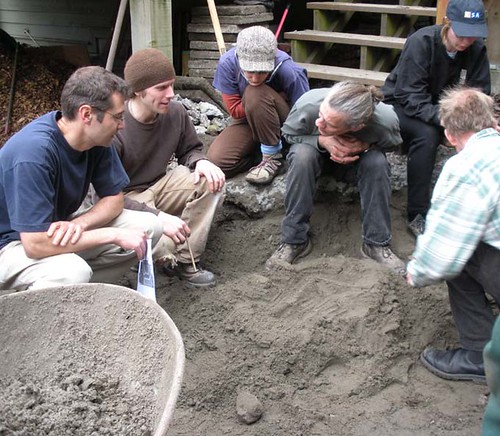
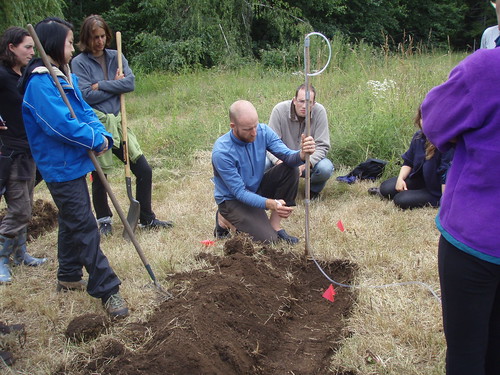
For two weeks Tanya and I hosted 24 people including ourselves. The end result being...19 new permaculturalists out into the world. While the part-time format is a great way to run a PDC, as it allows better access for time strapped people in cities, there are certain aspects of the 2 week residential format that can't be beat. The immersion of it all as well as access to out door labs, as shown above, really help to drive key concepts home. More and more we are finding that direct experience and reflection on lessons learned are a crucial part of the active learning process.

Permaculture Design Certificate number three, Full time Residential Course, Gull Lake Alberta, August 2009

Look out Oil Sands, here comes the Alberta permaculture movement. Rob and Michelle, of Ravis Sustainable, put together a fantastic PDC with field trips and outdoor hands projects to spare. I got it easy with this course, as all I had to do was teach and drink coffee. Since this course, local permaculture community groups are starting to pop up all over the prairies. I just can't get enough of Alberta and we are going to kick off our 2010 season with several Intro to Permaculture courses this coming January.

Stay tuned for more.
I promise!

Thursday, April 9, 2009

Compost, Snakes and Dams

Spring has sprung and we are busy as the bees. Here on Denman there is plenty to do on the farm; and course and consultancy have us in Vancouver on a weekly basis.
It's compost mania and we are having a lot of fun putting together different composts with different combinations of material. First, on Denman we had our lovely guest Jill from Green Temple Design helped us gather seaweed, leaves and other compostable materials and put it together. It was heaps of hard work but we gathered enough to make a go of it. We mixed the compost by measuring in big buckets ratios of Carbon and Nitrogen. We then used a bit of blood and bone left over from the garden construction and of course the magic ingredient of urine. On top of all that we put some comfrey tea that we've been brewing for the last few months and it only added to the already powerful odor. We decided to put in a chimney because we were sure that it was going to get very hot. We've used this method before, it keeps the pile from getting too hot and it worked well by allowing some of the heat to escape. The next day Jill and Jesse headed back to Vancouver to make more compost and I prepared seedlings and worked on the orchard. In Vancouver the permaculture design group put together their own compost pile using different materials not the least of them being several dead pigeons. The loft in the barn where Jesse gathered some hay had dead pigeons and owls and well... why not? The pile was made in our friend Jared's back yard in east Vancouver. I was not there for the initial turning but didn't have to be to know that this was one spicy hot concoction. When given some time and flipping around by Jared this pile evened out nicely. No more pigeon evident.
Back on the Island things are doing very well. The weather is beautiful, although, it may be leaving us soon. That is fine with us as some very
vigorous planting has gone on and we would love to have it rain now. Only one of our gardens was ready and organized for a planting blitz but we took to it as soon as we had a chance. I went a little crazy and got a lot of my seeds started many weeks ago so it was definitely time to set some out. While planting we discovered a small colony of snakes living in our garden. At first I was concerned that there were so many but then I found out they eat slugs. I had not thought of snakes when it came to controlling those who wish to eat my greens. So we took a picture of one of the more friendly snakes and he/or she was very compliant and very beautiful. Off to the town of Mission now to put in preliminary markers for some dam and swale systems for two lovely part-time homesteaders. Maybe we'll do some composting there as well. The well turned compost pile will be our cairn. Rather than leaving behind a pile of ruble to mark our place we will leave a piled humus cairn.

Sunday, March 15, 2009

Permaculture in the fast lane

In the past three months, every time I have tried to sit in front of this machine and tell a tale I find myself pulled away by other things. In order to catch up I will be light on words, and heavy on pictures. Do not mistake a lack of words, for little to say. More likely I have too much to say, I just wish to get up to speed and on to new things, as we have a lot happening this coming season.In January we taught two Introduction to Permaculture workshops. One was held in Calgary and the other in Canmore. We had a really great time and met some wonderful individuals, doing amazing things for the world. We made some new friends, Rob and Michelle Avis, and had a great exchange of information and ideas in regards to permaculture in BC and Alberta. We took the opportunity to visit some family and friends, while in Alberta, and were able to get to some pretty spots. When we arrived it was around -20 degrees in Calgary and two days later we went to Edmonton where it was -39 degrees. I have never been so cold before, but there is a special kind of beauty in a landscape so stark.
Permaculture is going wild and spreading across the province of Alberta at a blistering pace. With the energetic and dedicated contributions of Rob and Michelle, permaculture is gaining ground in the prairies. If you are interested in more courses being held there this summer check out Ravis Sustainable. While in Alberta, we had the honor of hosting our first children in an Intro class. Despite our hesitations, these to young eco-warriors exceeded expectations and added immensely to the experience.
We returned from Alberta at the beginning of February. Once back on the coast Jesse gave a series of talks and seminars in and around Vancouver. They all went very well and, while Jesse was a sharing our experiences with others, I was back on the farm pruning the apple orchard. In order to stay where we are and do what we do there is a certain amount of work that has to be done, on the farm. In between the work on the farm we surveyed our garden site to render a design and plan for the coming season.
At the end of February it was off to Kelowna, for the Building Sustainable Communities Conference put on by the Fresh Outlook Foundation. We were excited about this conference, as it was the very first invitation we received when our web site was launched in May of 2008. It was a great opportunity to share permaculture and our experience with members of the private, academic, and government sectors. The response was fantastic.
A day after the conference we were back on the coast to teach an Introduction to Permaculture workshop in Vancouver. With a full house and a lovely group of people it went very. Several of our students from that course have since enrolled in full length PDC course with us, it gives us a great sense of accomplishment to have such positive feed back. Hopefully we can assist some of these active and inspired people get on their feet, as teachers in the coming months. It is only through empowering local teachers and designers that we are going to turn the environmental boat around.
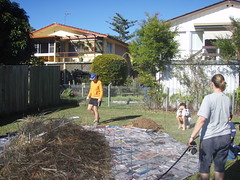
At the beginning of March we are back on Denman Island. For the next few days we worked hard to get our garden prepared for the coming growing season. We continued on from the surveying and planning phase into implementation. It took about one day of hard work to get most of the garden in place. This is the before picture, as we are trying to fix a gutter for rain water to flow into the garden off the roof.
We made on contour level pathways and used the rock that we pulled out of the site to help prop up three beds. We cover cropped and planted some mint and strawberry, both great crawling perennials, to help keep back the grass and weeds along the edges. This is to be an annual greens garden with a strong edge of perennials to help fill the space nature would otherwise fill for us. Below is a picture of the end product shaped, seeded and mulched.
I started my seedling early so that I can have nice strong plants to put in the garden this year. I was also a bit too excited and hopefully I am not too far ahead of the game. Gardening in a more northern area is going to be interesting but it is going very well so far.

And in our spare time...... well there is not much of it around but we do like to enjoy the island now and again. A few weeks ago we went out and dug a few dozen clams for Manhattan clam chowder. Even when we are playing we are working, we always try to come home with wild harvest food from our days off!!!
So here we are, garden planted, rain falling, seedlings growing, part time PDC starting on March 21st and now we have a crab trap out in Baynes Sound filling with food as I write. Busy, busy, busy and I haven't even mentioned what is on the horizon...another aid project?

Thursday, December 11, 2008

Permaculture....more than organic gardening!!! Part 2

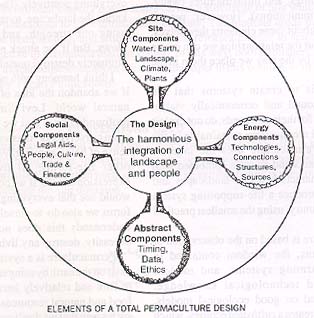
Energy Components
Technologies, Connection, Structures, Sources

When designing and establishing systems we must prioritize our investments first in structures and technologies that create energy, second that save energy and last that consume energy. It is inevitable that we will spend energy to initially establish our habitat. This is not a problem, so long as the designed habitat produces more energy over its lifetime than was initially spent. All systems should provide their own energy needs and remove themselves as much as possible from a dependence on distant sources. “When the needs of a system are not met from within, we pay the price in energy and pollution.” (Mollison)

When designing to the site-specific components the first priority is water, as water is an energy that can be put to great use. Higher elevation rainwater storage (earth dams and tanks) should be designed into a landscape whenever possible. This is done to provide gravity fed water for crops houses and other uses at lower elevations. Swales are always planted to trees. They are tree-growing systems. The trees use water harvested by swales to turn the suns energy into wood and foods, like nuts and fruit. The wood can be used to build and maintain structures, provide fiber and heat, for solar efficient homes, in high efficiency stoves. By first investing in the water structures we have created numerous energy storage in our settlement.

Social Components
People, Culture, Trade, Finance

Cooperation not competition is the key. Presently my wife and I live on an apple orchard, together we contribute 40-50hr/week of our time and energy to the orchard. We are not the owners. In exchange for our efforts, we get a roof over our heads, clean and healthful food from the garden, access to land for our own food production and a good community. Assessing this arrangement from a purely financial perspective would neglect all other levels of wealth that we obtain from the relationship. Further more we can be assured that a significant proportion of our time and energy will stay within the systems on the farm. If we were to have regular jobs, within the formalized economic system of distant capital and finance, most of our time and energy would inevitably by exported out of the local environment and economy. By working to keep our time and energy cycling in the local economy through a non formalized system of exchange: trade barter and cooperation, we work to ensure our efforts go towards building the health and security of our community. We reduce our need for monetary gain, as our basic needs of clean food, clean water, clean shelter and healthy community are produced through our basic day-to-day interactions.

Abstract Components
Timing, information, ethics

Without an ethic or belief structure and actions in relation to survival on our planet, permaculture has no starting point. The basic permaculture ethic is as follows:
Care of the earth
Care of People
Return of Surplus to the above two ends (can also be understood as setting limits to growth)
With the ethic as our sounding board, we can use all available information to design healthy communities and provide for those communities without degrading local and distant ecology. In order to spread good design we must spread information to where it is needed and assist others who are trying to learn. As much as we need to combat against a lack of information, we should guard against an over abundance of data. “Information is only a resource if acted upon.” (Mollison) At some point we need to take a step forward and get our hands dirty.

It is only through the functioning connections between components that a complete whole system design can be achieved. The designed systems must maintain and build the health of the local environment and work for its occupants, not distant sources of capital, if it is to be sustainable. This can only be achieved by analyzing the needs and products of various components and placing those components where they supply each others needs and best utilize the inherent energy flows of the landscape and climate. Organic gardening is vital to any sound design, as we all have a right to clean food, but it must be placed appropriately within the context of the whole systems design that is known as permaculture.

Saturday, November 22, 2008

Permaculture....more than organic gardening!!! Part 1


It is often the case that permaculture is mistaken for being just another form of organic gardening. This description is seriously lacking when considering permaculture and the influence it is having, and can have, in our rapidly changing world. “Permaculture is a design system for the harmonious integration of landscape and human habitat” (Mollison) An organic garden is only one element, an important element, but only one in an infinite number of different elements that might make up appropriately designed human systems. At the heart of good design are the functional relationships between elements and how they support each other. Permaculture is not about finding new and complicated high tech ways to support our present culture of waste and "protracted thoughtless labor". It is about integrating: site, energy, social, and abstract components to provide for human needs by creating and recycling resources and energy without degrading local and distant environments.
In the next few months we will be developing our own water, food, and animal systems here on Denman Island. Our system will be designed to provide for more than our own personal needs, as we are offering permaculture design courses and bringing in many people. As we go through the design process we will write about our efforts to implement permaculture design. Win , lose or draw we will reveal how easy or difficult it is to design a 1/4 acre lot starting from our front door. Through the process we will demonstrate how permaculture design is so much more than organic gardening.
Permaculture is not a hippie movement or a religion. Permaculture is a practical ethical way to move forward in a world of uncertain futures. The more we take responsibility for the cycle of resources around us, the richer and more abundant day to day life will be. The more connected we become to our community the more it will be there for us in the future.
http://www2.kenyon.edu/projects/Permaculture/ryan.jpg

Site Components
Water, earth, landscape, climate, plants

An appropriate design first considers local conditions and then harmonizes developed systems with those conditions to achieve that highest level of energy conservation possible.

Water, Access, Structures

This is the priority sequence of permaculture site design. By first designing water infrastructure (swales, dams, irrigation lines, diversion drains, irrigation ditches…) to harvest rainwater and store it passively throughout the landscape, we insure the fertility of the land and soil into the future. By storing, soaking and spreading water throughout the landscape we have preserved and even increased the health of the local ecology.
With the water system designed we can now turn our attention to accesses. The roads and trails must harmonize with the water system. All run off from roads and trails is directed passively to water harvesting structures like swales and dams. The compacted and sealed nature of access features results in flash run off during rain events. In a standard civil enegeneering situation this run off is a problem resulting in numerous logistical and environmental problems. In a harmonized permaculture design the run off from roads and trails are resources easily put to use in the whole system.
The final step in design, structures, is now easy, as building sites will become obvious against the backdrop of designed access and water. All water runoff from house and building sites is easily directed to the water systems.
The pattern of settlement development described above enriches the local environment through increased year round moisture, increasing the productivity of local soil conditions, often resulting in a surplus of usable energy as water stored in small earth dams up slope. The inceased moisture in the environment produces an ecology that supports and provides for the local inhabitant. Residents are required to use only enivronmentally safe products and activities, as any pollution produced is not carried away with the rain water but stays on site in the water harvesting structures. This is the ultimate feedback loop! In a permaculture design if we posion our environment we directly poison ourselves!!!

We have more to come in Part 2 "Energy Components" be sure to check back next week...