
Been out of touch for a while!! We spent the last two months in a remote region of Australia, near Mudgee, NSW. We are now home in Canada and getting back on our feet after the plane flight.
While in the Australian bush, we lived with some good friends of ours, Nick and Kirsten, whom have a little homestead called Milkwood. They are in the beginning stages of their great adventure and it was wonderful to help get things going. Milkwood is a great example of permaculture design in action.
We planted trees, planted a small garden, took down old fences and helped out where ever we could. Near the end of our stay we helped in the construction of their Humanure Hacienda, poo compost system.
Poo is a touchy subject!

Everyone we've meet has a different approach to handling poo. Some send it to a septic system others use various forms of composting, all avoid sending it to municipal systems and try to recycle or reuse.
The system being used at Milkwood is one of many techniques out there and it fits well with Nick and Kirsten's comfort zone and circumstance.
Milkwood is located in a remote area and piles of composting Humanure will not draw much attention. Not everyone is in this situation so other options have to be explored. It is great to see how simple it could be to handle poo. Composting poo is safe,
 practical, efficient and cost effective. The biggest obstacle is getting over any unwarranted fears of poo, one might have.
The Humanure Hacienda is a beautifully simple two structure system.
1. A manure and urine capture.
Basically this structure is an outhouse with a bucket or bin to catch deposits. After a deposit is made the user covers the poop with some sawdust. When the catching bin becomes full it is time to make a trip to the second structure.
2. The three bin composting system, "Humanure Hacienda,"one roof covered for dry straw and two for poo composing piles.
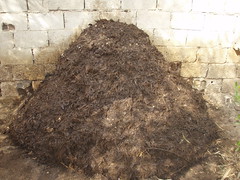
For the average family two composting bays is enough. When a bucket from the outhouse is delivered it is added to the compost pile and covered with straw. The layers of poo and straw build over the course of a year and fill one composting bay. It is then time to start filling the empty composting bay. At the end of the second year the first pile has completely composted and is ready for use in the garden. The designer of this system reckons that the compost is safe for use in the veggie patch!!! Very much up to the individual on this one.
To get a more complete understand of this system you can read The Humanure Handbook. I highly recommend it, whether you live urban, suburban or rural. It is an eye opening read.
Rather than treating poo as waste, it easily turned it a high value product for a fraction of the cost associated with septic and municipal treatment systems.
Composting is a responsible practical and safe way of handling human manure and more of us need to be doing it. We commend Nick and Kirsten for there efforts and thank them for sharing this experience with us. What away to end our year abroad.
An interesting note...
Before all other structures the Humanure Hacienda was the first structure to be raised at Milkwood. Even before a house has been built, Nick and Kirsten have taken responsibility for the most fundamental aspect of human nature.
Keep charging team!!!



 Posts
Posts


